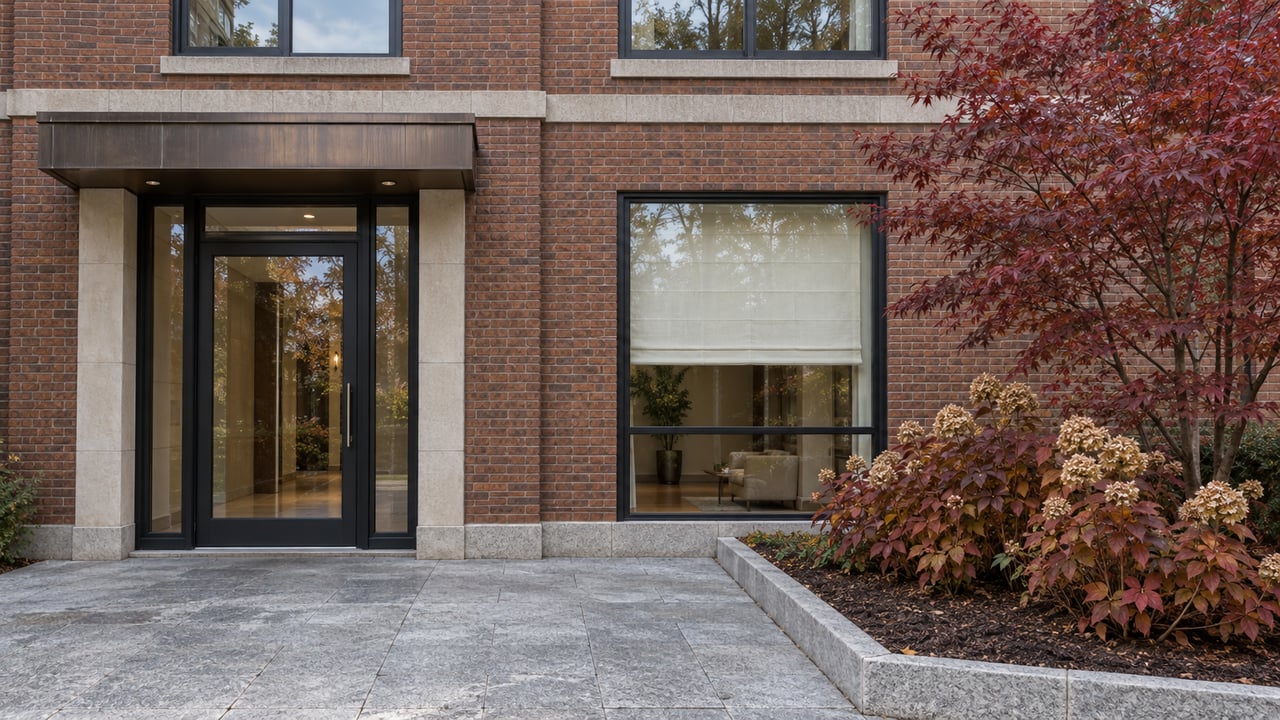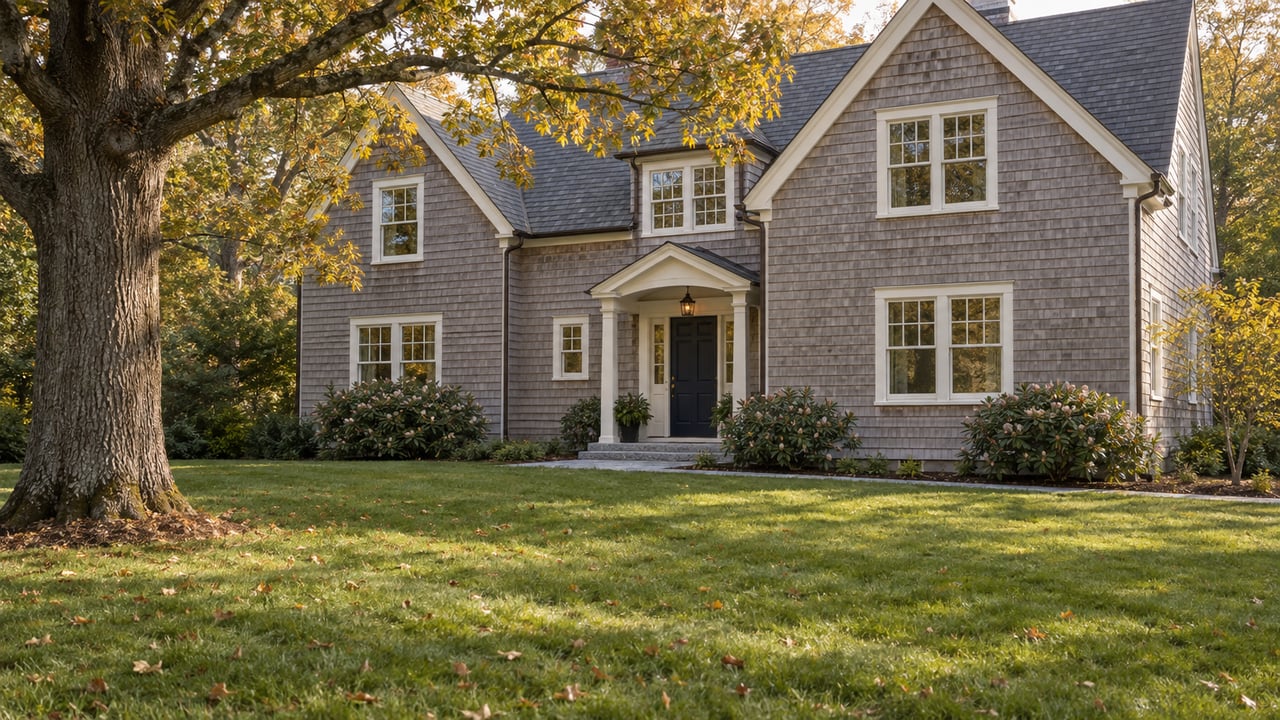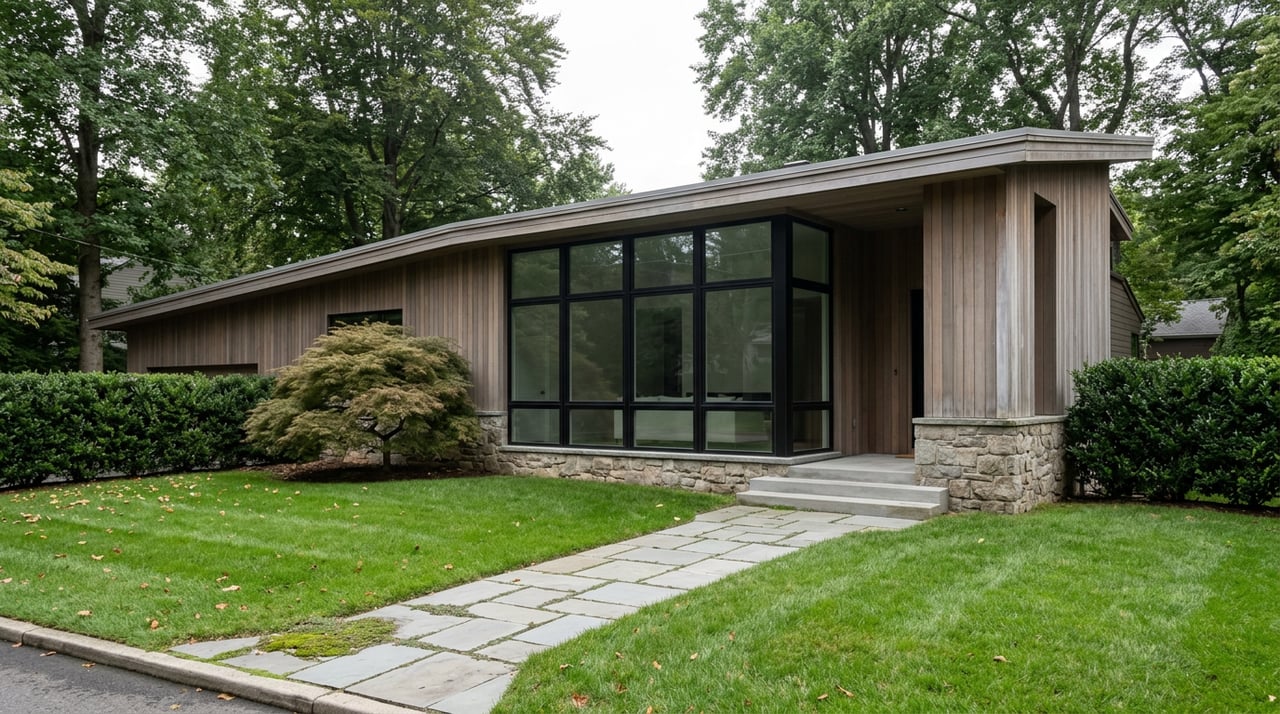
Drive through Wellesley Farms on any given month and you will pass a construction site: a dumpster in the driveway, a Bobcat parked on what used to be a lawn, a new colonial rising where an older house stood a year earlier. It looks like growth. A town adding inventory, updating its housing stock, giving buyers more to choose from.
It is not growth. It is replacement.
Since 2003, Wellesley has issued permits for roughly 1,200 single-family homes. Of those, only about 95 represent genuinely new construction on land that had no house on it before. The remaining 1,105 replaced a house that was already there, almost always with something larger. Over that same stretch, the town's median home price roughly doubled, from around $1 million to about $2 million. That is not a coincidence of two unrelated trends. It is one mechanism explaining the other. When a town has no vacant land left to build on, every "new home" search comes back to the same conclusion: buy an old house and replace it. The price of admission stops being about square footage and starts being about the lot underneath.
The Permit Math Behind the Price Curve
For a buyer comparing Wellesley to other towns on a spreadsheet, this changes what the median price actually measures. A rising median in a town with abundant vacant land usually means more buyers competing for a growing pool of homes. A rising median in a town like Wellesley, where roughly 82% of housing-zoned land is restricted to single-family use as of 2024, means something closer to the opposite: a fixed number of lots being bid up and rebuilt on, over and over, by buyers who have decided the location is worth the cost of demolition.
An October 2020 analysis by the Brookings Institution put a number on that cost difference directly: building a new single-family home in Wellesley Hills ran an average of $1.9 million in development costs, against roughly $500,000 per unit for new condominium construction. That gap is the reason teardown-rebuild, not subdivision or multi-family conversion, is the default path to a new house in this town. The zoning does not allow the alternative.
What the 2017 Bylaw Actually Regulates
Wellesley adopted a demolition review bylaw at its 2017 Annual Town Meeting, formally Article 46C of the town's bylaws, effective August 15, 2017. It is worth understanding exactly what it does, because it is narrower than its reputation suggests.
The bylaw only applies to a dwelling built on or before December 31, 1949. From there, the process runs in a specific sequence:
- A property owner or buyer applies for an Eligibility Notice through the Planning Department to confirm the home's age.
- If the home was built after that 1949 cutoff, the process ends there. No further review.
- If it qualifies as an Eligible Building, the Historical Commission holds a public hearing to decide whether the house should be "Preferably Preserved."
- If the Commission finds the house should be preserved, a 12-month delay is imposed before a demolition permit can be issued.
- An owner can still apply for a waiver to shorten or eliminate that delay, and the Commission may grant it if the owner shows a genuine, unsuccessful effort to find a buyer willing to preserve the home.
Twelve months is on the long end for this kind of bylaw. The Cape Cod Commission says most demolition-delay ordinances in Massachusetts run six months, even though twelve months is the length the Massachusetts Historical Commission recommends as the standard. Wellesley chose the longer standard. On paper, that reads as a stronger protection than most of its peer towns offer.
Why the Safeguard Filters Less Than It Sounds
In practice, the bylaw touches a small fraction of the housing stock it was written to protect.
When it first went into effect in the summer of 2017, the town received 37 Eligibility Notice applications in the following months. Of those, 11 were cleared immediately because the homes were built after the 1949 cutoff. Of the 22 that qualified for review, 12 were determined not to be "Preferably Preserved" and cleared for demolition. Only 7 were found worth preserving and received the 12-month delay, and 5 of those 7 owners immediately applied for a waiver to shorten it.
That pattern has held. At a July 2024 Historical Commission meeting, a commissioner noted that Wellesley has 560 houses built before 1900. Since the bylaw took effect in 2017, only 19 of those houses have gone through the demolition delay process. Not 19 denied. Nineteen total, reviewed at all, out of a pool of 560 homes old enough to be the town's most architecturally significant stock.
For a buyer weighing whether an older Wellesley home is protected from replacement, the honest answer is that the bylaw is a speed bump for a small subset of pre-1950 homes the town actively flags, not a broad shield over anything with some age on it. A house can be 90 years old, fully within the bylaw's reach, and simply never come up for review if no one files the paperwork triggering it.
What This Looks Like on the Ground
The pattern shows up most visibly in Wellesley Farms and the Fells, where large, well-located lots carrying homes built in the 1940s through 1970s meet consistent builder demand. It is common in those neighborhoods to see two houses on the same street change hands within months of each other and follow the same path: purchase, demolition, a rebuild, and a resale at a price built almost entirely around the land, not the structure that used to sit on it. Firms that design custom homes in town describe a typical project timeline of 24 to 36 months from initial site analysis through move-in, longer if Large House Review or demolition review is triggered along the way. That is not a quick renovation. It is a multi-year commitment before the new house is livable.
The price dispersion this produces is wide, and it shows up in the closed-sale data every week. In the last week of April 2026, Wellesley closings ranged from $5,775,000 for a home on Maugus Avenue down to $1,150,000 for one on Weston Road, a spread of more than $4.6 million within a single week of reporting. A median calculated across that range tells you almost nothing about what either buyer actually purchased. One bought a finished, premium product. The other likely bought a lot with a viable path to becoming one.
What to Check Before You Assume a House Is Off Limits
If you are comparing an older Wellesley home against newer construction elsewhere, a few questions are worth asking before you assume the older house is protected from ever being replaced:
- What year was it actually built? The bylaw's entire trigger depends on whether construction predates December 31, 1949.
- Has an Eligibility Notice ever been filed on the property? If not, the bylaw has never been tested against this specific house, regardless of its age.
- If the home was reviewed and found "Preferably Preserved," has a waiver already been granted? A 12-month delay that started years ago may have already expired.
None of this makes an older home in Wellesley a bad purchase. It does mean the age of a house on the market tells you less than the lot beneath it, and less than whether anyone has ever formally asked the town what happens if it comes down.
A Few Questions Worth Asking Directly
Does the demolition bylaw apply to every old house in Wellesley? No. It only applies to homes built on or before December 31, 1949, and only after the Planning Department confirms that age and the Historical Commission holds a hearing.
Can an owner get the 12-month delay reduced? Yes. The Historical Commission can grant a waiver, often when the owner shows a genuine, unsuccessful attempt to sell the home to a buyer willing to preserve it.
Is Wellesley's delay longer than what nearby towns use? It is. Most Massachusetts demolition-delay bylaws run six months. Wellesley adopted the twelve-month standard recommended by the state Historical Commission
If you are trying to figure out what a specific Wellesley property's history actually is, whether it has ever been flagged under this bylaw, or what a comparable lot in Wellesley Farms or the Fells has sold for recently, that is exactly the kind of question worth a direct conversation rather than a portal search. Nekky Parkiotis works these neighborhoods regularly and can walk through what a specific address's zoning, age, and lot history actually mean for your search. Let's Connect and look at the numbers together.
This article is general information, not legal, tax or financial advice. Consult a qualified professional about your situation.